

The Mathematics of the Mother — Why Sāṃkhya Calls Yoga a Science, Not a Religion


Counting is the oldest way a human being ever tried to understand the world. Before we had gods or governments, we had fingers, and we used them to make the overwhelming flood of experience hold still long enough to be known: one moon, two hands, three stones, a herd of many. To count a thing is to claim that it has a shape the mind can hold — that beneath the blur of appearances there is order, and that the order can be read. And so it is one of the most astonishing facts in the history of thought that the oldest philosophical system of India is named, quite simply, counting. Sāṃkhya — the word means “number,” “enumeration,” “the reckoning” — is the tradition that looked at the whole of reality, inner and outer, and set out to count it: to name every irreducible element of existence and show exactly how they fit together. It is not a faith. It is an inventory of the real.
This is why the tradition it underwrites can say something that startles the modern ear: that yoga is not a religion. Yoga rests on two feet — Sāṃkhya, which supplies the map of what a human being is made of, and Vedānta, which points beyond the map to what cannot be counted at all. Sāṃkhya’s whole purpose is to take the felt sense of “me” and patiently deconstruct it into its parts, so that its strengths and weaknesses become visible, the way a mechanic lays a whole engine out on the bench. It is, in the source’s own plain words, “scientific, mathematical and analytical.” And it is worth being precise about what that claim means, because we throw the word science around loosely:
Definition of science: knowledge or a system of knowledge covering general truths or the operation of general laws especially as obtained and tested through scientific method. Definition of scientific method: principles and procedures for the systematic pursuit of knowledge involving the recognition and formulation of a problem, the collection of data through observation and experiment, and the formulation and testing of hypotheses. (Merriam-Webster Dictionary)
By that definition, yoga qualifies. The problem is stated — why do we suffer? The data is gathered — not out there, but in the only laboratory to which each of us has total private access, our own experience. The hypothesis is formed and tested, in the body, on the breath, in the behaviour of the mind under observation. Nothing has to be believed on someone else’s authority. It has to be tried, and seen for oneself. This is the sense in which yoga is a science and not a creed: it does not ask you to accept a story about reality. It hands you a method and says — look.
The great count: twenty-five realities
What, then, does Sāṃkhya count? It arrives at twenty-five tattva — twenty-five “thatnesses,” irreducible categories of the real — and it sorts them under two headings that never collapse into each other. On one side stands Puruṣa: pure consciousness, the silent witness, the one who sees but does nothing, changeless and uninvolved. On the other stands Prakṛti: Nature — the single, seething, creative substance out of which every other thing is woven. Everything you could ever point to — your body, your senses, your thoughts, your very sense of being a separate “I” — belongs to Prakṛti. Only the bare light of awareness that knows all of it belongs to Puruṣa. Twenty-four of the tattvas are the unfolding of Nature; the twenty-fifth, standing alone, is the Knower for whom the whole show unfolds.
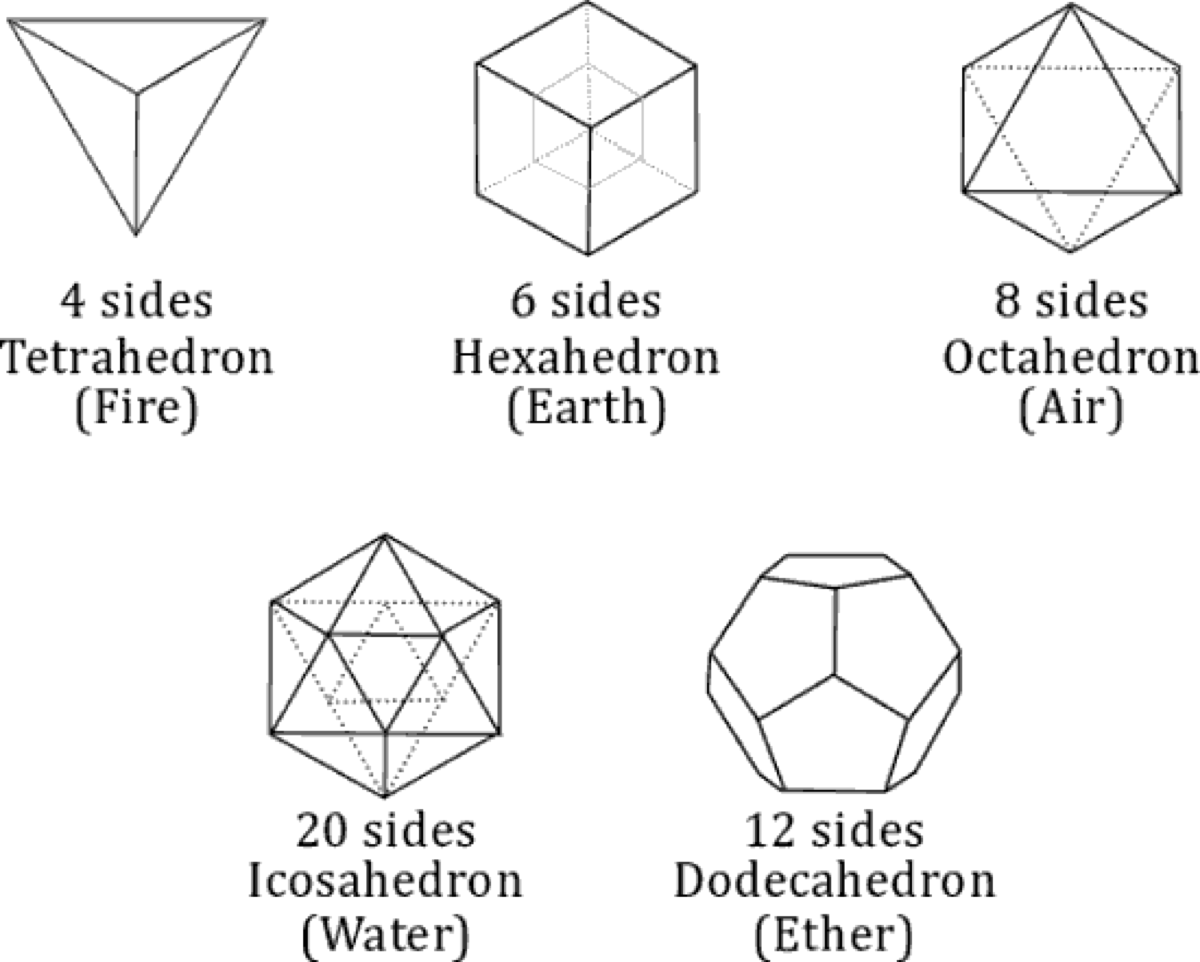
And the unfolding itself is countable, a cascade with a precise order. Out of unmanifest Prakṛti emerges first mahat or buddhi, the great cosmic intelligence; from it ahaṃkāra, the “I-maker” that carves the seamless world into me and not-me; from that, the manas or processing mind, together with the five powers of knowing (hearing, touching, seeing, tasting, smelling) and the five powers of acting, and the five tanmātras, the subtle essences of sound, touch, form, taste and smell. And out of those subtle essences condense, at last, the five mahābhūtas — the gross elements the ancients called earth, water, fire, air and ether, the physical world you can stub your toe on. From two irreducibles, twenty-five realities; from twenty-five realities, by combination and recombination, the entire teeming universe. It is, quite literally, a mathematics of manifestation.

Beneath all of it run the three guṇa — the three strands from which the whole rope of Nature is twisted: sattva, the quality of light, harmony, clarity; rajas, the quality of motion, heat, passion; and tamas, the quality of weight, inertia, rest. When the three are in perfect equilibrium, Prakṛti is unmanifest, at rest, holding its breath. When the balance tips, the strands begin their endless braiding, and worlds pour out. The modern interpreter Jayaram V, whose essay the original post carries, calls this “a play of numbers” — the insight that Nature is an automaton unspooling a mathematics latent within it, that “Nature produces nothing new,” that whatever appears was already present in its cause, hidden, waiting for the conditions that would draw it out. Your birth, he writes, is not a random event but “a transformative process in which causes become effects.” Nothing is invented. Everything is revealed — drawn out of what already, silently, contained it.
Why it matters that nothing is created and nothing is lost
Hold that thought — Nature produces nothing new; nothing is created and nothing is destroyed, only transformed — and notice that you have heard it before, in a physics classroom, as the conservation of mass and energy. The seers who composed the Sāṃkhya reckoning had no particle accelerators. They had something else: a relentless, disciplined attention turned on the one instrument they could fully examine, which was themselves. And by reading the microcosm carefully — the small closed world of a single human being — they made the daring wager that the macrocosm runs on the identical laws. As above, so below; as within, so without. The same accounting that governs a thought governs a galaxy. This is not mysticism dressed up as science. It is the original scientific intuition: that reality is lawful, that it is legible, and that the law is the same everywhere.
And here is where the counting becomes a form of reverence, and the philosophy becomes an ecology. If Prakṛti is not dead stuff but the single living substance of which your body and the body of the Earth are both woven — if the very same five elements compose your bones and the mountains, the same breath moves your lungs and the winds — then Nature is not a warehouse of resources to be drawn down but a ledger that always balances, in which every taking is an entry that must, somewhere, be paid. To poison a river is not to harm something outside you; it is to alter an equation that runs straight through your own tissue. The modern world imagines it can cheat the accounting — extract without return, consume without consequence, take the interest and never touch the principal. Sāṃkhya, coldly and mathematically, says: you cannot. Nothing is created; nothing is lost; every effect was hidden in its cause and every cause will yield its effect. To honour the divine planet, then, is not sentimentality. It is arithmetic. It is the sober recognition that we are one term in an equation far larger than ourselves, and that the equation is not mocked.
There is a strange comfort in this, too. If nothing is truly random — if what looks like blind chance in a life is only a pattern too vast for us to yet compute — then the universe is not hostile, merely lawful. And a lawful universe is one you can work with. This is exactly what the yogi does. Having counted the self down to its parts, having seen that the body is Prakṛti and the senses are Prakṛti and even the anxious chattering “I” is Prakṣti — a manufactured thing, an evolute, a knot in the rope — the practitioner begins, gently, to loosen their identification with the whole countable apparatus, and to rest instead as the one thing in the entire inventory that was never an object at all: the witness, the Puruṣa, the silent light by which everything else is seen. That is the meaning hidden in the image the original post chose: one plus one equals one. The seer and the seen, consciousness and Nature, appear as two — and are known, in the end, as a single seamless happening.
A science you run on yourself

So when the tradition insists that yoga is not a religion, it is not being combative. It is being accurate. A religion asks for belief; Sāṃkhya asks for observation. A religion hands down a cosmology to be accepted; Sāṃkhya hands you a method and dares you to falsify it in the only place it can be tested. You do not have to accept a single metaphysical claim on faith. You have only to sit, and watch, and count — to notice that the breath is not you, the sensations are not you, the thoughts arise and pass and are therefore not the one to whom they appear — and to follow that patient subtraction all the way down to what remains when everything countable has been set aside. What remains cannot be counted, because it is the one doing the counting. That is the whole experiment. And it is why yoga has been able to cross every border and speak in every language and sit comfortably inside every faith and none: because at its root it is not asking anyone to convert. It is asking them to look at what is already, wordlessly, the case.
From Sāṃkhya — Count Yourself Down to the Witness
Sit quietly for ten minutes and perform the oldest experiment. Begin with the body: this is earth and water, fire, air and space — arranged, borrowed, and one day returned. It is mine, but it is not me. Move to the senses: these are instruments I look through; they are not the looker. Move to the mind: these thoughts arise on their own and pass on their own; if I can watch them come and go, I cannot be them. Move, finally, to the sense of “I” itself — the ahaṃkāra, the I-maker — and notice even that is something you are aware of. Now ask the only question Sāṃkhya was ever really asking: who is aware of all this? Do not answer in words. Just rest, for a breath, as the one who cannot be counted because it is doing the counting. You have just run, in miniature, the whole science of yoga — and met the one part of you that no equation can hold.
References
- The classical enumeration of the twenty-five tattva — Puruṣa (consciousness, the 25th) and the twenty-four evolutes of Prakṛti, woven of the three guṇa (sattva, rajas, tamas) — is set out in the Sāṃkhya Kārikā of Īśvarakṛṣṇa (the classical Sāṃkhya text of the early centuries CE), and the system is traditionally traced to the sage Kapila.
- The definitions of science and scientific method are quoted, as in the original post, from the Merriam-Webster Dictionary.
- The “play of numbers” reading of Sāṃkhya as a mathematical model of Nature — “Nature produces nothing new… every possibility is already inherent in the cause” — is drawn from the modern interpretive essay by Jayaram V carried in the source post.


